

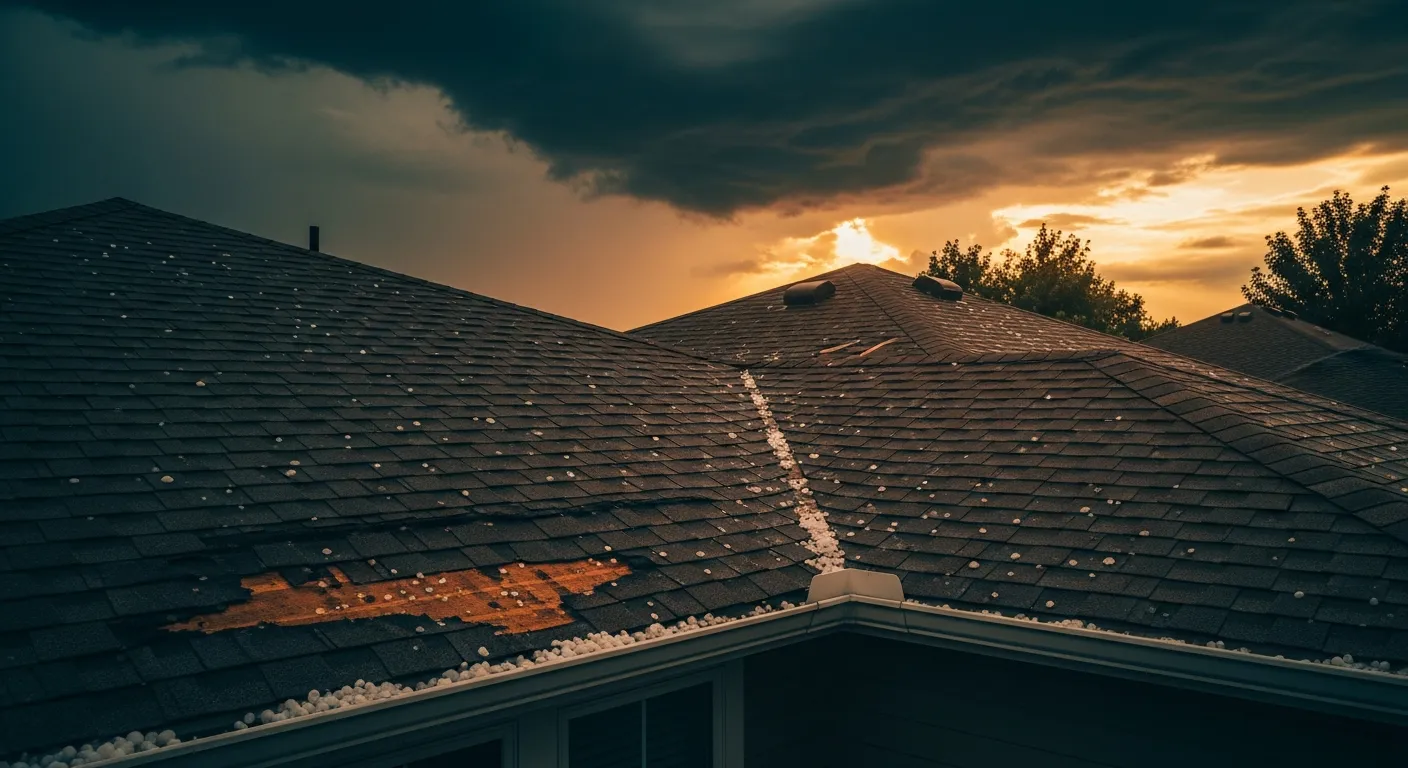
After a major storm, the contractors capturing the most work aren't better at roofing. They deploy verified assessments faster. Here's what separates them operationally.
In the 30 days following a major hail or wind event, residential property claims in the affected region typically spike 300 to 500 percent above baseline. For roofing contractors and insurance carriers operating in that market, it represents simultaneously the highest-demand and highest-risk period of the year. The work is abundant. The question is always whether the operational infrastructure is in place to capture it before someone else does.
The contractors who fall behind after a major storm are not usually less skilled or less motivated than the ones capturing the volume. They are slower to deploy verified assessments. In a market where homeowners and carriers make decisions based on who shows up first with defensible documentation, deployment speed is the competitive variable. Craft and reputation matter, but they matter less in the first 72 hours after an event than the ability to get a trained assessor on a roof with the right documentation templates and a live QC process.
Understanding what makes some operators faster than others, structurally faster, not just urgency faster, is the thing that separates contractors who consistently grow during storm seasons from those who consistently scramble through them.
Why Most Assessment Programs Break Under Surge Conditions
Most field assessment programs are built for steady-state conditions: a manageable weekly queue, familiar geographies, predictable volume. When a storm event adds 200 assessments to that queue in 72 hours, three things break simultaneously.
Capacity doesn't scale overnight
Hiring and onboarding additional field assessors takes weeks. Relying on whoever is available in the market after a storm means sending undertrained technicians who miss critical structural details, document damage inconsistently, or produce reports that require follow-up before a carrier will accept them. Every rework cycle adds days to a timeline that was already under pressure, and while your team is running callbacks, a competitor with deeper bench capacity is booking the next job.
Generic templates create claim friction
Carriers have specific documentation requirements. Different carriers use different data formats, require different annotated photo structures, and have varying thresholds for what constitutes a defensible scope-of-loss report. A generic assessment template that works for a standard re-roofing evaluation may not meet the documentation standard for an insurance claim, which means reports come back for revision, claims stall, and the contractor absorbs the delay while the homeowner considers other options.
Independent verification is harder to establish than operators assume
Insurance carriers and their legal teams are increasingly rigorous about evaluating assessment quality. A field report produced by someone with a financial stake in the claim outcome is weighted differently than a report from a genuinely independent third-party assessor. The documentation may look identical. The defensibility under scrutiny is not. Operators who cannot credibly demonstrate independence in their assessment process are building on a foundation that erodes under review.
The contractors winning post-storm volume aren't moving faster on instinct or hustle. They built the infrastructure before the season started and activated it the moment the event hit.
What Defensible Storm Damage Documentation Actually Requires
Operators who consistently produce claim-ready assessments, reports that move through carrier review without friction, share a few structural characteristics regardless of storm volume or regional market.
Pre-built carrier-specific templates
The documentation requirements for one major carrier differ from another, and both differ from what a restoration contractor needs for a scope-of-loss report. Assessors who arrive with a template already formatted to that carrier's requirements produce reports that enter the review queue clean and exit it fast. The contractor who built those templates in advance, before storm season, not during it, is the one whose reports move first.
Live QC before the tech leaves the site
The single most effective intervention in assessment quality is a real-time quality check completed while the technician is still on the property. If a photo is missing, a measurement is inconsistent, or a data field is incomplete, the assessor can correct it on site in minutes. Discovering the same gap after the tech has left means a callback, a scheduling delay, and a report that sits in limbo while the homeowner and carrier wait. That delay is time your competitor is using.
Satellite and historical data layered with field documentation
A strong storm damage assessment combines what the field tech documents on site with satellite imagery history, prior roof condition data, and storm track information. The field documentation alone is a snapshot. The layered dataset is a defensible record. Carriers who have been through disputed claims know the difference, and the contractors who consistently provide the layered version are the ones carriers call back.
Building Surge Capacity Before You Need It
The operators who consistently capture post-storm volume are not the ones who respond fastest after the event. They are the ones who have a deployment-ready assessment program in place before storm season begins. That distinction is harder to copy than it sounds.
Surge capacity is not about having more employees on standby. It is about having a verified network of trained assessors you can activate on demand, carrier-specific templates pre-built and ready to deploy, and a QC layer that operates in real time so every report that leaves the field is complete and defensible on delivery. That infrastructure takes weeks to build. It cannot be assembled in the 48 hours after a storm hits, which is exactly why the contractors who built it are the ones capturing the volume while everyone else is still staffing up.
Storm season doesn't give you time to build the program after it starts. The assessment infrastructure you need in July has to be in place in April.
What to Look For in a Damage Assessment Partner
If you're evaluating external partners for post-storm assessment capacity, these are the operational questions that tell you whether a partner can actually help you move faster, or whether they're a fair-weather solution that will slow you down at the moment you need speed most.
Can they deploy within your required window regardless of regional volume? Can they build carrier-specific templates to your documentation requirements, or do they work from a generic format? Is live QC built into their process, or is it a post-submission review step? Are their assessors genuinely independent from the claim outcome? And what does their surge history actually look like: have they operated at volume after a real event, or are they telling you what their capacity could be?
The answers to those questions separate the partners who make you faster from the ones who add another handoff to an already pressured process.
How Radicl Approaches Damage Assessment
Radicl deploys verified independent field assessors on demand for roofing contractors, restoration companies, and insurance carriers. Every assessment includes live QC review while the technician is still on site, carrier-specific templates built to your documentation requirements, and satellite history layered with field documentation. Nationwide deployment capability with 48 to 72 hour turnaround, built for the surge conditions of storm season as well as steady-state volume throughout the year.
If you're building a post-storm assessment program for this season, the conversation to have with a deployment partner is the one above, before the first event, not during it.
Related Resources
- Roof damage assessments — Radicl's on-demand storm damage assessment program
- Field operations solutions — nationwide field ops for contractors at scale
- Where Your Solar Pipeline Is Actually Losing Time — the same handoff problem, applied to solar permitting